 EN


How to understand the annealing process of copper clad aluminum wire production
Drawing makes wire smaller, but it also leaves the material harder and less able to deform. The annealing process uses controlled heat to change that condition. For copper clad aluminum wire, the goal is not simply to make a conductor as soft as possible: the copper layer, aluminum core and bond between them must remain suitable for the next operation.
From a production perspective, the useful question is whether the finished wire has the agreed mechanical and electrical properties at the point where it will be drawn, stranded or insulated. This guide explains the heat-treatment sequence, the variables that influence it and the checks a buyer or process engineer can discuss with a supplier. It is not a furnace operating recipe.
Why wire needs heat treatment after drawing
When copper clad aluminum wire is reduced through dies, deformation changes its internal structure. This work hardening generally increases strength and reduces ductility. If further drawing or handling is required, a controlled annealing process can restore some ability to deform. The amount of softening depends on the incoming condition and the actual thermal exposure.
CCA is a composite, not a single metal. Copper surrounds an aluminum core, and each responds to heat and deformation differently. A result that looks acceptable in a simple bend does not establish the state of the bond or the electrical properties. The treatment must be assessed against the full wire specification, rather than copied from a schedule for bare copper.
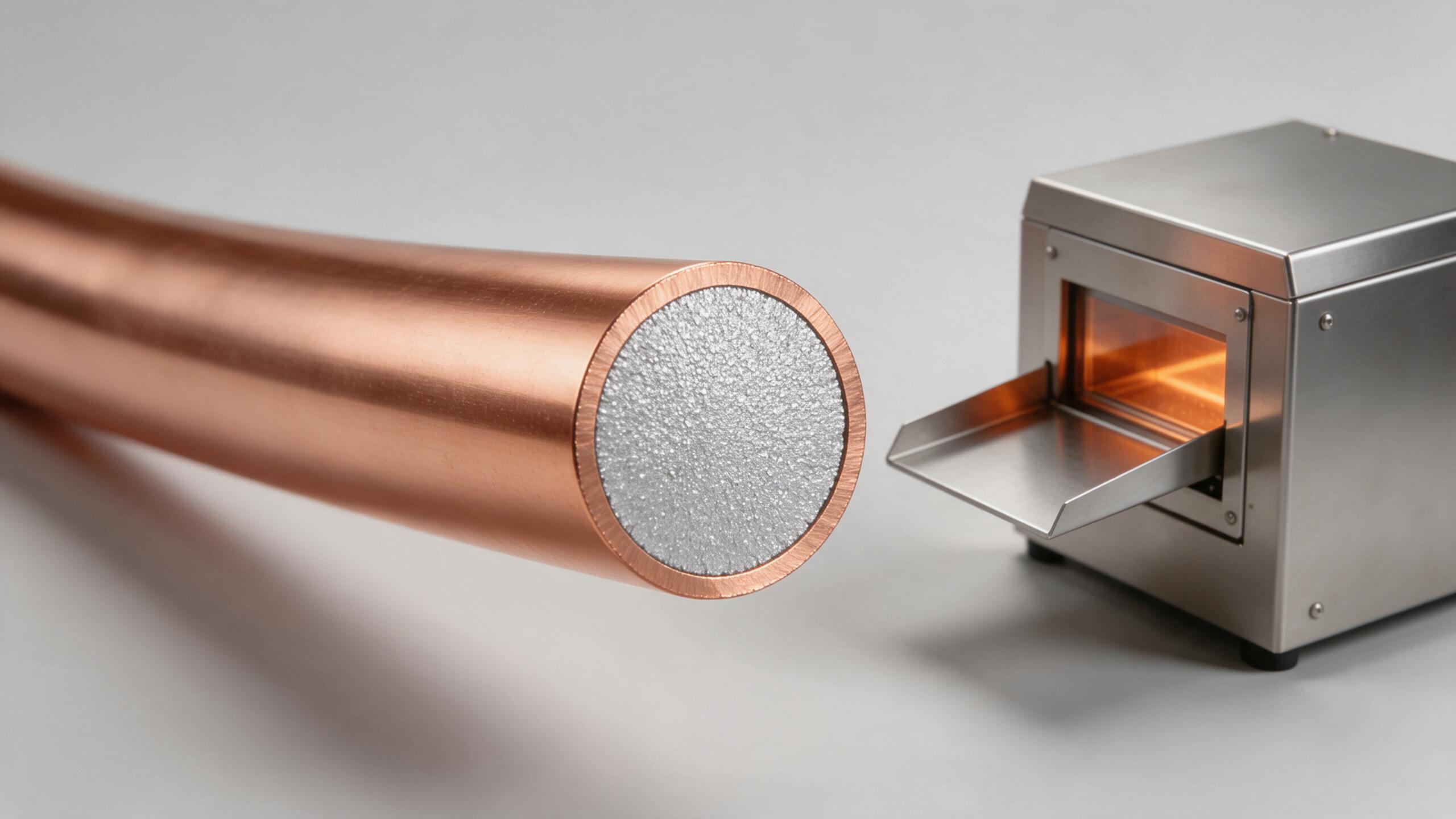
What happens during the annealing process
The broad sequence is heating, exposure at a suitable temperature and cooling under controlled conditions. During heating, recovery can reduce some of the effects of cold work; with an appropriate temperature and time, recrystallization can produce a softer structure. Further exposure can also encourage grain growth. These changes depend on alloy composition, prior deformation and the temperature history, so they should not be treated as identical stages at fixed temperatures for every wire.
Manufacturers may use a batch furnace or a continuous system. In a batch, the load and its position influence how quickly the wire reaches the intended condition. In a continuous line, the wire travels through the heated zone, so line speed and effective heated length influence exposure time. A furnace setpoint is not automatically the actual temperature of the wire. Measure or validate the relationship for the equipment and load being used.
Cooling is part of the annealing process too. Its purpose is to bring the product to a condition suitable for safe handling and subsequent processing while managing surface quality. Cooling methods and atmosphere should follow the equipment design, material specification and site safety procedures; a universal slow-cooling instruction is not appropriate for every nonferrous wire.
The copper–aluminum bond changes the trade-off
Heat also affects the boundary between the copper cladding and the aluminum core. At that boundary, diffusion can form intermetallic compounds. Their presence and growth depend on temperature, time and starting construction. Excessive growth can affect mechanical and electrical performance, making the thermal history as important as the desired softness.
A 2024 study of multistage-drawn CCA wire reported thicker intermetallic layers as temperature increased during three-hour laboratory treatments. The finding illustrates a trade-off; it does not establish a setting for another wire size, construction or production line. For any proposed annealing process, a manufacturer needs to validate the combination of wire properties and bond condition on the actual product.
There is also a practical communication issue: a shiny surface does not prove a sound bond. Equally, a break during a later operation does not by itself identify heat treatment as the cause. Incoming material, drawing history, equipment contact and testing method all merit review before a process change is made.
Variables to control and record
Think of the annealing process as a controlled exposure, rather than a single number. These variables should be considered together:
- Wire construction and incoming temper: Core alloy, cladding proportion, diameter and prior reduction affect the response. Confirm the material identification and drawing history before comparing runs.
- Temperature and exposure: Record the applicable setpoint, the verified wire temperature where feasible and the time at relevant conditions. In continuous production, include line speed and the heated path.
- Load or line arrangement: A coil, spool or moving wire can heat differently. Document loading, spacing and position or the corresponding line setup.
- Atmosphere and cleanliness: Surface oxidation and residues can influence appearance and later processing. Confirm the furnace atmosphere, cleaning approach and downstream requirements.
- Cooling and handling: Record the method and conditions, then check the wire for handling damage and surface changes before the next operation.
Changing several variables at once makes a trial difficult to interpret. Where practical, compare defined conditions with representative samples, keep records and agree beforehand on the measurements that will decide whether the result is acceptable.
How to assess the finished wire
Mechanical checks typically include tensile strength and elongation, measured under an agreed method and sampling plan. The balance matters: a lower strength value alone is not proof that the annealing process achieved the required combination of properties. If the wire will be stranded or insulated, a relevant downstream trial can expose handling issues that a single laboratory value does not explain.
Electrical resistivity or conductivity is another important check, alongside diameter, surface condition and cladding or bond evaluation where specified. ASTM B566 is an example of a specification for copper-clad aluminum wire that addresses tensile strength, elongation and electrical resistivity. Its applicability, edition, class and acceptance limits must be agreed for the order; mentioning the standard does not mean any particular product is certified or compliant.
For a useful comparison, identify samples by lot and test location, use agreed units and report the method as well as the result. When a result falls outside the agreed range, review the sample, measurement, incoming condition and recorded thermal history before deciding whether to repeat or adjust the annealing process.
Questions to discuss before an order or trial
A concise specification helps production and purchasing teams discuss the same wire. Include the finished diameter and tolerance, cladding construction, required temper, intended cable application and any later drawing, stranding or insulation steps. Add the required tensile, elongation and electrical limits, along with the test methods and sampling expectations.
Ask how a representative sample will be identified, which process records can be shared, and how a proposed change will be evaluated. If bond integrity, surface appearance or spool handling matters to the application, specify the inspection method rather than relying on a general quality description. Record open questions and agree who will approve the trial result.
Litong Cable Technology Co.,Ltd lists CCA, CCAM and CCS wire among its conductor materials. Buyers discussing copper clad aluminum wire can use the questions above to prepare a clear inquiry. The appropriate annealing process remains specific to the construction, equipment and agreed end-use requirements, and should be confirmed through documented testing.


