 EN


How to manage custom diameter orders for copper clad aluminum wire factory
A custom diameter order is not just a number on a purchase order. For copper clad aluminum wire, the buyer and factory also need a shared definition of the finished wire, the way it will be measured, and what happens if a requirement changes. A clear handoff gives engineering, purchasing, and quality teams the same reference before production begins.
Use the process below to prepare an inquiry, assess a proposed specification, and release an order. It is a planning framework rather than a statement of any factory's available sizes, lead times, or approval status.
1. Start with the application and the measurement point
Describe where the copper clad aluminum wire will be used and what happens to it next. A wire that will be drawn again presents a different discussion from one that goes directly into a cable-making operation. Name the intended cable construction, any subsequent stranding or insulation steps, and the equipment constraints that matter to your team.
Then specify whether the custom diameter refers to bare finished wire, an individual strand before assembly, or another clearly defined stage. Do not assume an AWG designation and a decimal measurement mean the same thing to every recipient. If you provide both, state which one controls acceptance and how any conversion is handled.
For copper clad aluminum wire, the nominal outside diameter alone does not define the conductor. Identify the required copper-clad construction and any agreed material class or temper. Where those details are still open, mark them as questions rather than silently treating them as supplier commitments.
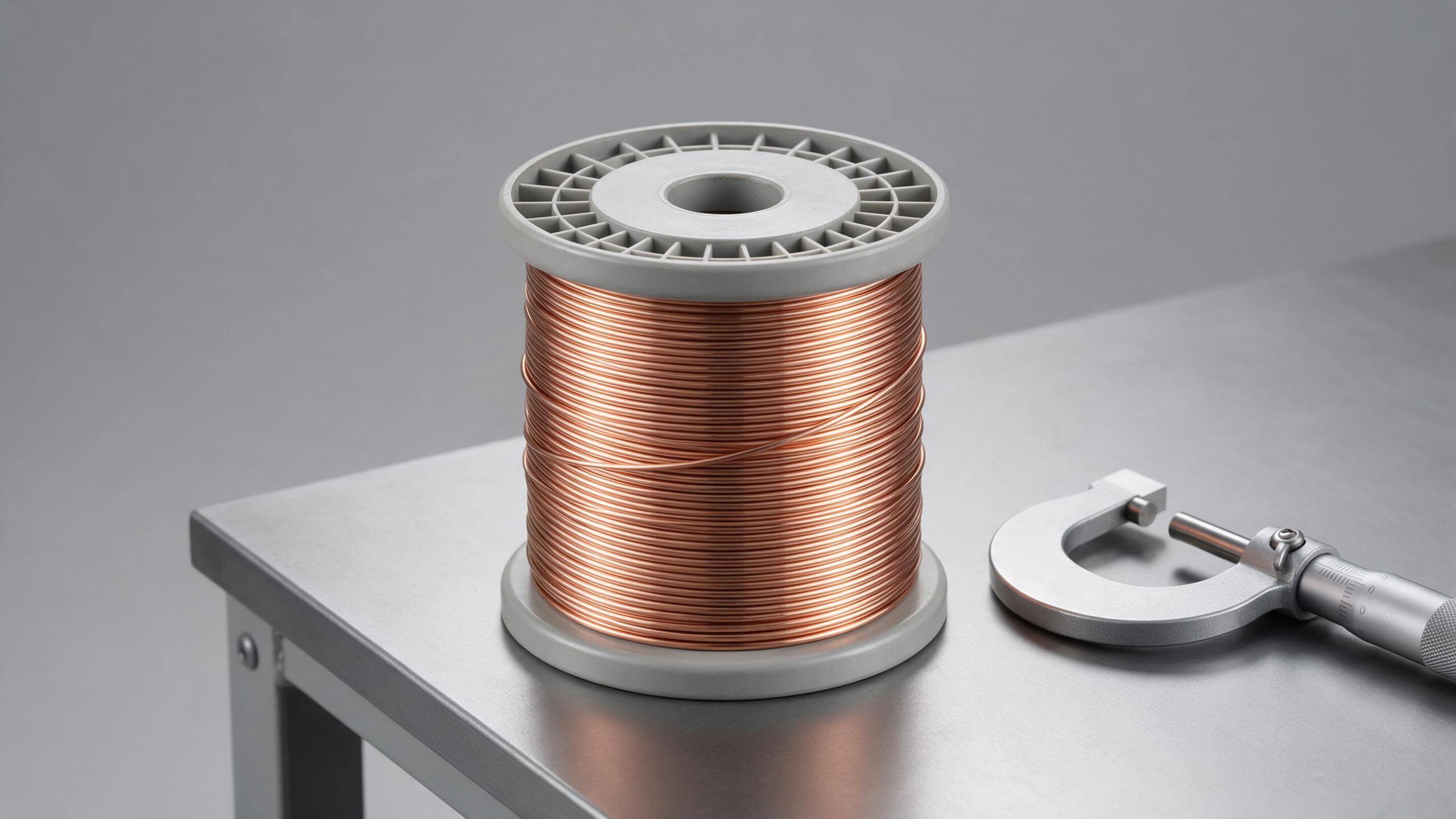
2. Put the tolerance and inspection method in writing
Every custom diameter request needs an agreed tolerance, unit, and measurement method. State the nominal value in millimeters or another agreed unit, followed by the permitted upper and lower limits. Avoid a generic request for a tight tolerance: without an acceptance range, two quotes for copper clad aluminum wire may not be comparable.
Agree on the instrument, its calibration expectations, where measurements are taken along the wire, and whether readings in more than one orientation are needed to assess roundness. Decide how many reels or samples are checked, who performs the inspection, and which documented procedure governs a disagreement. The sampling plan and limits must be chosen for the actual order, not copied from an unrelated product.
Record the specified condition of the wire at measurement. Surface condition, deformation during handling, and instrument choice can affect an individual reading. If the buyer's incoming inspection and the supplier's release check use different approaches, align them before accepting a sample.
3. Connect diameter to the rest of the specification
A practical specification for copper clad aluminum wire links the size to electrical, mechanical, and processing requirements. Diameter can influence cross-sectional area, but it does not by itself establish resistance, strength, or suitability. Ask engineering to identify the properties and test conditions that matter for the end use instead of assuming a diameter is a substitute for a complete specification.
- Construction: identify the required cladding specification and how it will be verified, where applicable.
- Electrical checks: specify the resistance or resistivity requirement, test method, and reference conditions relevant to the order.
- Mechanical checks: define the required temper and any tensile or elongation criteria, test method, and acceptance limits.
- Surface and processing: describe relevant surface condition, downstream drawing or stranding, and any special handling constraints.
- Documents: list the requested inspection results, traceability information, and approval records.
For bare copper clad aluminum wire, ASTM B566 is one specification the parties may review: its published scope includes copper-clad aluminum wire and addresses tensile, elongation, and electrical resistivity requirements. The buyer and supplier should confirm whether it applies, which edition controls, and which project-specific requirements are additional. Mentioning a standard is not evidence that a particular product conforms to it.
4. Request a feasibility review before agreeing commercial terms
Send the custom diameter specification with the estimated quantity, delivery destination, preferred shipment schedule, and expected repeat-order pattern. Ask the factory to identify which requirements it can offer and which need discussion. For copper clad aluminum wire, this review should cover the requested size and tolerance alongside construction, mechanical condition, spool format, and testing.
A quotation should make the basis visible: price unit, quantity or weight basis, packaging, transport terms, any tooling or setup charges, and the period for which the offer is valid. Ask how changes to order size or packaging affect the quote. A lower unit price is not directly comparable if the offers use different acceptance limits or include different inspection documents.
Do not treat a quoted date as a production commitment until both parties have agreed the order, sample approval conditions, and release schedule. Where there are unknowns, assign an owner and a date for resolution in the order record.
5. Approve a sample against the same revision
If both parties agree that a sample is needed, link the sample request to the exact custom diameter specification and revision. Label the sample and record the quantity, wire condition, reel or spool type, and test documents supplied with it. Ask the buyer's quality team to measure copper clad aluminum wire using the agreed procedure, then involve the production team in any relevant process trial.
Record the actual observations, not just a pass or fail. For example, note measured values, inspection locations, equipment settings for the trial, and any issue seen during handling. If a result is outside the agreed limit, isolate the affected sample and discuss the evidence with the supplier before deciding on a revised sample or specification.
A sample acceptance does not automatically approve a later change in construction, tolerance, or processing route. Document what was approved, who approved it, and which requirements will also apply to the production lot of copper clad aluminum wire.
6. Control changes from order release to receipt
Issue the purchase order with a specification identifier and revision, the agreed quantity and unit, delivery terms, inspection requirements, and any sample-approval reference. For each reel of copper clad aluminum wire, agree the identification needed to connect the package to the order and the corresponding inspection records.
If a custom diameter or another technical requirement changes, stop relying on the earlier email chain. Log the proposed change, assess its effect on related dimensions and tests, and obtain written approval from the relevant buyer and supplier contacts before the affected work proceeds. Where material has already been made, agree how it will be identified and handled.
At receipt, compare labels and documents with the released order. Perform the agreed incoming checks and retain the results with the lot record. If a discrepancy arises, keep the measurements, reel identification, and specification revision together so both teams can investigate the same evidence.
A concise RFQ checklist
Before requesting copper clad aluminum wire, include these points in one shared document:
- Application, downstream process, and the contact responsible for technical approval.
- Custom diameter, unit, tolerance, measurement stage, inspection method, and sampling plan.
- Construction, temper, relevant electrical and mechanical criteria, and any agreed standard and edition.
- Quantity, packaging, reel identification, destination, and requested schedule.
- Sample requirements, test reports, approval owner, and revision-control process.
Litong Cable Technology Co.,Ltd lists copper clad aluminum wire among its cable-material product families. Bring the completed checklist to a supplier conversation, leaving unresolved limits and capabilities as questions for written confirmation. For more on verification planning, see the factory quality-check guide. A documented specification and a traceable approval sequence are more useful than a diameter figure standing alone.


