 EN


How does copper clad aluminum wire supplier support technical problem solving
A break on a drawing line or a resistance result outside an agreed limit is not, by itself, a diagnosis. The question for a cable manufacturer is whether the incoming conductor, the processing conditions, the measurement, or a combination of these factors needs attention. A copper clad aluminum wire supplier can help by turning that question into a documented investigation rather than offering a generic material recommendation.
Useful technical support starts with a shared description of the application and ends with a testable next step. The following framework shows what a buyer can request and what information to prepare. It describes a practical approach, not a claim that any particular supplier has already performed these services.
Start with the operation, not a presumed cause
Before discussing a change to copper clad aluminum wire, identify the stage where the issue appears. Is the conductor being drawn, stranded, insulated, or assembled into a finished cable? Note whether the symptom appears at startup, after a reel change, or only at a particular machine setting. A photo of the affected area and a retained sample can make the description more precise.
Share the production date, reel identification, material specification, machine type, line speed, and relevant setup records. Include the frequency of the issue and how it was detected. If one reel behaves differently from another, keep their identities separate. With those details, buyer and supplier can separate observations from assumptions and choose useful comparisons.
Agree on the question to answer
For example, a team might ask whether a break is associated with incoming wire variation or with a change in pay-off tension. That is a hypothesis, not proof. Record the agreed specification and the last known acceptable production conditions, then identify the measurements needed to compare the two. Avoid altering several settings at once; otherwise, a later improvement may be hard to interpret.
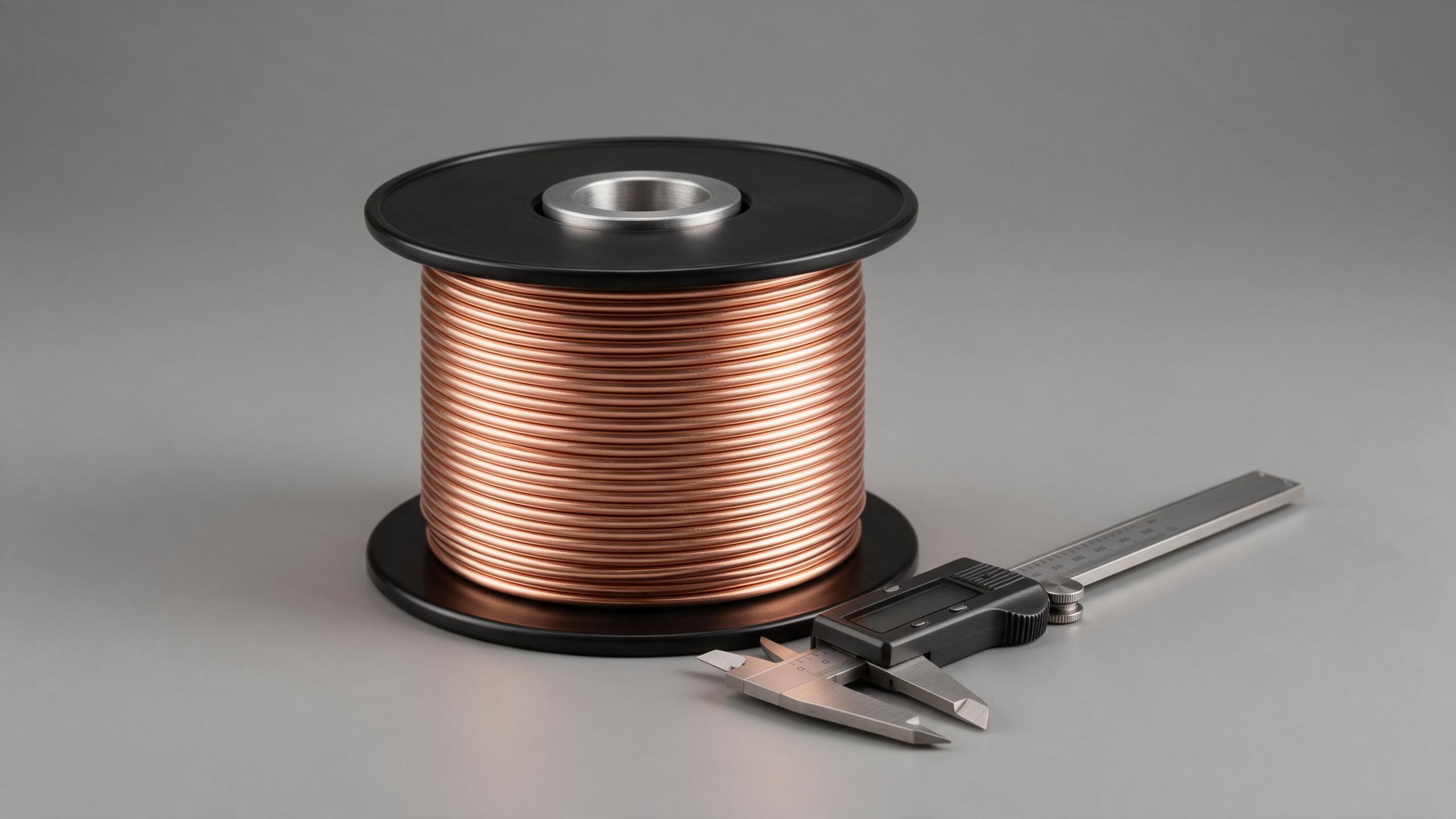
Translate the issue into measurable requirements
Copper clad aluminum wire combines an aluminum core with a copper outer layer. A material name alone does not define diameter, tolerances, electrical resistance, mechanical properties, surface condition, or cladding requirements. A useful supplier discussion connects each requirement to the intended cable and the buyer's production process.
- Dimensions: specify nominal diameter, tolerance, measurement method, and where the sample is taken.
- Electrical behavior: agree on resistance or resistivity limits, reference temperature, specimen length, and measurement method.
- Mechanical handling: discuss tensile strength, elongation, bending and the conditions under which each is assessed.
- Surface and cladding: define the observations and test method that matter to the application instead of relying on appearance alone.
- Delivery format: confirm reel dimensions, winding expectations, identification, and storage conditions.
ASTM B566 is a specification for bare round copper clad aluminum wire in electrical applications; its scope includes electrical resistivity and mechanical requirements. It may be a useful reference when relevant to the order, but the buyer and supplier should agree on the applicable edition, class, and test requirements. Mentioning the specification does not establish that a given product conforms to it.
Investigate process symptoms with the supplier
When wire breaks during drawing or stranding
Set aside identified samples from affected and unaffected reels of copper clad aluminum wire. Record the break location, machine settings, pay-off route, die condition where relevant, and any recent changes to handling or lubricant. Ask the supplier which incoming measurements could clarify the comparison. A review of diameter, mechanical test results, surface condition, and reel winding may help narrow the investigation; none alone proves a cause.
Agree on a controlled trial with the production team. For instance, hold the material and other settings constant while comparing one approved pay-off condition. Record the result and the length processed for each condition. The trial should follow the plant's safety procedures and be reviewed by its engineers before a production setting is changed.
When an electrical result is unexpected
First confirm the test method and the temperature at which the measurement was made. Check sample identification, gauge, specimen length, instrument setup, and contact condition. Then compare the result with the agreed limit for that copper clad aluminum wire, using the same units and reference conditions. If results still differ, request a comparison plan and retain samples for both parties.
For cable designs carrying signals, resistance is only one part of the discussion. Frequency, conductor geometry and the complete cable construction also matter. Do not assume that a conductor with a copper surface behaves identically to solid copper in every application. The finished cable must be evaluated against its own requirements.
Use a sample plan to separate a proposal from evidence
A sample of copper clad aluminum wire can answer a useful question only if the parties agree what will be tested. Write down the proposed material, process conditions, quantity needed for the trial, acceptance criteria, and responsible reviewers. Specify which results are recorded, how specimens are identified, and what happens if results are inconclusive.
A short trial is not automatically evidence of long-term production performance. If the sample passes an initial check, plan any further qualification required by the finished-cable design and the buyer's quality system. If it fails, document the actual result and consider whether the material, process, or test conditions need further investigation before ordering a replacement.
Keep technical and purchasing decisions aligned
Procurement needs more than a verbal answer. Ask for a written summary identifying the copper clad aluminum wire specification, the reported symptom, the samples examined, the tests performed, and open questions. It should distinguish measured results from proposed explanations. Engineering, production, and quality teams can then review the same record before a purchasing decision is made.
If a change is proposed, identify the affected specification revision, the reason for the change, the people who must approve it, and the verification needed before routine use. Confirm whether the proposed revision affects the downstream cable design or a customer's requirements. A lower unit price is not a substitute for this review, and a technical discussion does not replace an approved change process.
What to send in the first technical inquiry
To make an inquiry about copper clad aluminum wire actionable, provide the final cable application, current drawing or specification, conductor diameter and tolerance, operating and processing conditions, and the issue observed. Add test methods and results, reel or lot identification, photographs where useful, and a clear request: for example, review the specification, discuss possible checks, or agree on a sample plan.
Litong Cable Technology Co.,Ltd lists CCA, CCAM, and CCS wire among its cable-material offerings. Buyers considering copper clad aluminum wire can use this checklist to prepare a discussion with the company or another qualified supplier. Confirm the support available for the specific request, and make the final material decision only after project-specific validation.


