 EN


Introduction to Copper Clad Aluminum Magnesium Wire in Modern Engineering
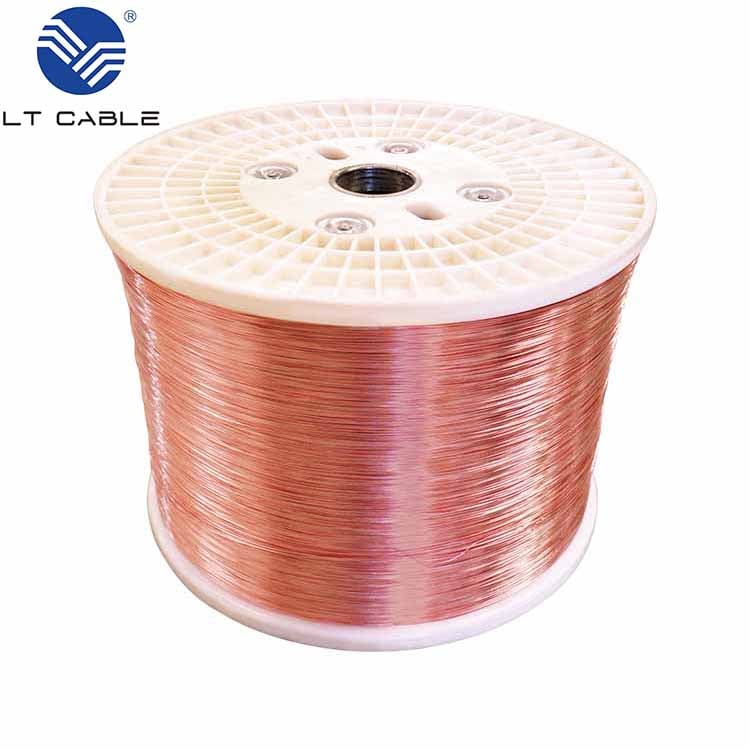
The continuous push toward miniaturization and weight reduction across aerospace, automotive, robotics, and industrial automation has forced design engineers to rethink conductor metallurgy. In this context, copper clad aluminum magnesium wire has emerged as a revolutionary material, redefining what is physically and economically possible in lightweight cable design. Traditional solid copper conductors impose severe weight penalties, which compound rapidly in complex multi-core harnesses and long-run transmission lines. By introducing a precision-alloyed aluminum-magnesium core coated with a metallurgically bonded outer copper layer, manufacturers achieve a unique combination of extreme low density, enhanced tensile strength, and reliable electrical conductivity.
Exploring the distinct CCAM conductor benefits reveals why modern high-performance wiring harness architects are rapidly transitioning away from heavier, legacy alternatives. Litong Cable provides advanced manufacturing solutions that leverage these precise alloy characteristics to meet strict industrial demands without sacrificing signal integrity, mechanical durability, or operational safety. Understanding the metallurgical composition and performance metrics of copper clad aluminum magnesium wire is essential for procurement specialists and design engineers seeking a competitive edge in modern cable engineering.
Core Mechanical and Metallurgical Advantages for Lightweight Cable Design
When engineers tackle complex lightweight cable design challenges, mechanical resilience is just as critical as raw density reduction. Pure aluminum is exceptionally lightweight, but it suffers from low tensile strength, high creep properties, and extreme susceptibility to breakage during intensive cabling processes such as multi-strand twisting, high-speed braiding, and continuous mechanical flexing. The deliberate introduction of magnesium into the aluminum core alters the micro-structural grain formation, significantly boosting yield strength, elasticity, and fatigue resistance under vibrational stress.
When this alloyed core is encased in a uniform outer copper layer via advanced cladding and thermal-mechanical bonding techniques, it creates a composite conductor that successfully withstands harsh mechanical stress environments. Utilizing copper clad aluminum magnesium wire allows aerospace and automotive engineers to reduce total harness weight by up to forty percent compared to traditional solid copper equivalents. This substantial weight shedding translates directly into improved fuel economy in vehicles, extended battery range in electric vehicles, and higher payload capacities in aerospace systems.
Furthermore, the enhanced tensile strength of the CCAM material minimizes conductor snap rates during high-speed braiding operations, optimizing manufacturing throughput and reducing scrap rates at specialized production facilities like Litong Cable. The synergistic relationship between the magnesium-enhanced core and the high-conductivity copper shell provides an ideal balance of mechanical flexibility, structural integrity, and long-term durability.
Electrical Efficiency and High-Frequency Performance Profiles
A frequent concern among design engineers evaluating alternative conductors is electrical performance, particularly regarding signal attenuation, DC resistance, and skin-effect efficiency. Because electrical current at high frequencies naturally tends to travel along the outer perimeter of a conductor due to the skin effect, the inner core material has a minimal impact on high-frequency signal propagation and radio frequency shielding. The outer copper cladding of copper clad aluminum magnesium wire provides an optimal, low-resistance pathway for high-frequency signals, ensuring that signal attenuation remains well within acceptable industry thresholds for data communication and RF coaxial applications.
Evaluating comprehensive CCAM conductor benefits also requires a careful analysis of DC resistance and thermal dissipation under load. While solid copper still maintains a lower baseline DC resistance, modern manufacturing optimizations in copper-to-aluminum volume ratios have closed this performance gap significantly. For lightweight cable design in signal, control, and data transmission architectures, the slight variance in DC resistance is often an acceptable trade-off for the massive weight reduction and mechanical reinforcement gained. Litong Cable implements rigorous quality testing procedures, measuring electrical resistivity, elongation percentage, and coating thickness uniformity to ensure every production batch meets international electrical standards.
Comparative Performance Matrix for Advanced Conductors
To visualize how different conductor materials stack up against each other in modern engineering projects, a direct parameter comparison is essential. The following table highlights key performance metrics for various shielding and conductor materials.
| Conductor Material | Relative Density | Tensile Strength | DC Resistance | Cost Efficiency | Mechanical Durability |
| Copper Clad Aluminum Magnesium | Very Low | High | Moderate | Excellent | Superior |
| Standard Copper Clad Aluminum | Very Low | Moderate | Moderate | Excellent | Good |
| Bare Solid Copper | High | Moderate | Very Low | Low | Moderate |
| Tinned Copper Alloy | High | High | Low | Moderate | High |
As illustrated in the comparative table, copper clad aluminum magnesium wire bridges the gap between lightweight requirements and structural robustness. While standard copper clad aluminum provides weight savings, the addition of magnesium elevates tensile strength to levels that rival traditional copper alloys while maintaining an exceptionally low density profile.
Industrial Applications and Quality Assurance at Litong Cable
The practical deployment of copper clad aluminum magnesium wire spans diverse high-tech sectors, including electric vehicle battery management harnesses, aerospace avionics, medical imaging cabling, and high-speed industrial data interconnects. In these demanding environments, reliability under severe thermal cycling and continuous mechanical vibration is paramount. Ensuring that the metallurgical bond remains intact across the entire length of the wire prevents galvanic corrosion and localized oxidation over time.
Litong Cable employs advanced optical inspection systems, laser micrometer measurements, and high-tension wrap testing to guarantee structural perfection across all production runs. By integrating high-grade CCAM conductor benefits into their manufacturing pipelines, engineering teams achieve optimal results in lightweight cable design, securing long-term operational reliability and superior field performance in every deployment.


