 EN


Exploring the Fundamental Engineering Distinctions in Conductor Grades
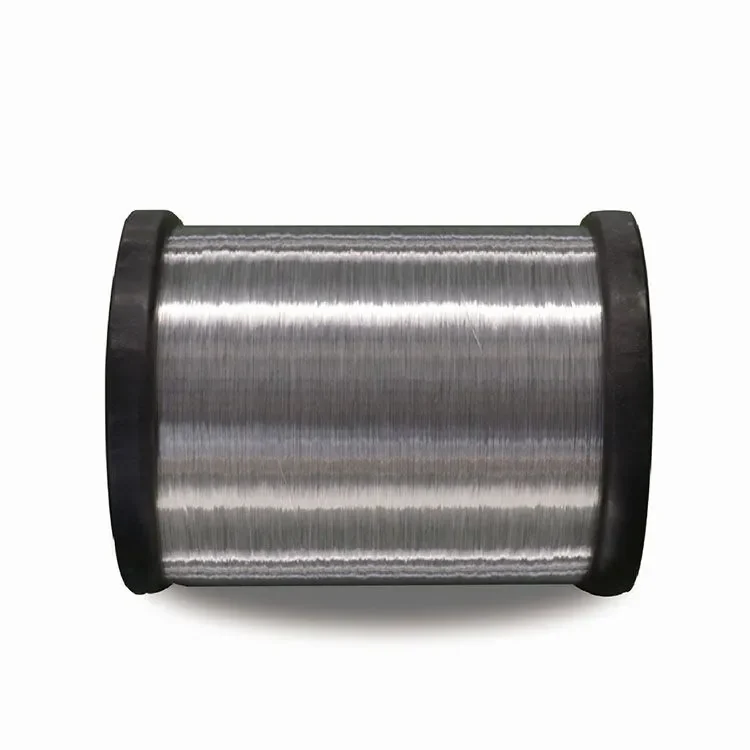
When procuring composite conductors for specialized wiring projects, understanding the distinct technical classifications is paramount for system success. Within the broader family of copper clad aluminum wire, manufacturers engineer specialized variations tailored for entirely different operational environments. The most notable division exists between power cable grade copper clad aluminum wire and RF grade copper clad aluminum wire. While both materials combine a lightweight aluminum core with an outer copper layer to reduce weight and material expenses, their internal metallurgical specifications, copper volume ratios, and surface finish tolerances vary dramatically.
Procurement specialists and design engineers at organizations like Litong Cable recognize that deploying the wrong conductor grade can lead to severe operational inefficiencies, signal degradation, or structural failure under stress. Power cable grade materials focus primarily on bulk current-carrying capacity, DC resistance optimization, and mechanical elongation suitable for heavy-duty distribution harnesses. Conversely, RF grade copper clad aluminum wire is meticulously crafted for high-frequency signal propagation, prioritizing precise skin-effect performance, tight dimensional uniformity, and minimal signal attenuation over extended telecommunication networks.
Metallurgical Composition and Copper Volume Ratio Variances
The most critical differentiator between these two categories lies in their volumetric copper-to-aluminum ratio. For power cable grade copper clad aluminum wire, the copper volume percentage typically hovers around 10 percent to 12 percent. This percentage is optimized to provide sufficient conductivity for power transmission and low-voltage control circuits while maximizing weight savings. Because power transmission relies heavily on uniform cross-sectional current distribution at low frequencies, a standard copper cladding thickness is entirely adequate for long-run cable installations.
In stark contrast, RF grade copper clad aluminum wire often demands a higher or more rigorously controlled copper volume percentage, typically ranging from 15 percent to 20 percent or higher depending on the specific frequency band requirements of the coaxial cable. At high frequencies, electrical current travels exclusively along the outer perimeter of the conductor due to the skin effect. Therefore, RF grade conductors require an impeccably uniform, flawless copper skin free from micro-fissures or localized thinning. Any imperfection in the outer copper layer of an RF conductor creates high-frequency impedance mismatches, causing severe signal reflections and increased attenuation across gigahertz transmission channels.
Electrical Performance Profiles and Signal Propagation Dynamics
Evaluating conductor grade differences requires a deep dive into electrical behavior under varying operating frequencies. Power cable grade materials are engineered to perform efficiently under 50 Hz, 60 Hz, or direct current conditions. Their primary objective is to maintain low DC resistance to minimize thermal heating and power loss over heavy transmission runs. The internal aluminum core handles the bulk of the electrical load, while the outer copper layer prevents surface oxidation and facilitates reliable terminal connections.
On the other hand, RF grade copper clad aluminum wire operates in vastly different frequency domains, ranging from megahertz to several gigahertz. In these high-frequency scenarios, surface smoothness and concentricity dictate signal integrity. RF grade production lines at facilities like Litong Cable incorporate advanced laser micrometer monitoring and continuous eddy current testing to ensure that the copper cladding concentricity variance remains within microscopic tolerances. This rigorous oversight prevents phase distortion and ensures stable characteristic impedance, which is critical for aerospace communication systems, cellular infrastructure, and high-frequency data transmission networks.
Technical Comparison Matrix for Conductor Classification
To provide a clear analytical framework for engineering procurement teams, the following table breaks down the core parameter distinctions between the two distinct conductor types.
| Evaluation Metric | Power Cable Grade Conductor | RF Grade Conductor |
| Primary Operational Focus | Bulk power distribution and ampacity | High-frequency signal propagation |
| Typical Copper Volume % | 10% to 12% | 15% to 20% or higher |
| Surface Finish Standard | Standard industrial finish | Ultra-smooth, micro-defect free |
| Concentricity Tolerance | Moderate commercial tolerance | Strict microscopic precision |
| Key Target Application | Automotive harnesses, power feeds | Coaxial cables, RF transmission lines |
As illustrated in the comparative table, the manufacturing tolerances and metallurgical targets for RF applications are significantly stricter than those required for general power distribution, reflecting the complex demands of high-frequency signal transmission.
Quality Assurance Protocols and Manufacturing Excellence at Litong Cable
Securing high reliability across diverse industrial sectors necessitates stringent quality assurance protocols tailored to each specific grade. For power cable grade production, quality checks focus heavily on tensile strength, elongation percentage, and wrap test performance to ensure the wire withstands aggressive twisting and cabling machinery without core separation.
When manufacturing RF grade copper clad aluminum wire, quality control protocols expand to include high-resolution optical cross-section analysis, surface roughness profiling, and attenuation testing. Litong Cable employs state-of-the-art testing laboratories to verify that every production spool meets international standards such as ASTM B566. By maintaining strict separation between power and RF manufacturing lines, Litong Cable ensures that engineers receive precisely tailored conductors that eliminate supply chain guesswork, optimize system performance, and elevate overall network reliability.


