 EN


When a cable design calls for a braided layer, the conductor is being asked to do more than carry electrical energy. It must travel through the braider, tolerate repeated bending, form a consistent pattern, and then serve within an outdoor cable system. That is why high tensile stranded copper clad aluminum wire deserves evaluation as a process-and-application choice, not as a shortcut based on one material property.
From a conductor-material selection perspective, the useful starting point is simple: define the braid’s job first. Is it an electromagnetic shield, a bonding path, a reinforcement-related layer, or part of a hybrid construction? The answer changes which electrical, mechanical, and processing evidence matters. Outdoor cable braiding also adds exposure conditions that should be considered at the finished-cable level.
What the material name tells you—and what it does not
Copper clad aluminum wire has an aluminum core with a copper cladding. In a stranded construction, several individual wires work together rather than relying on one solid wire. The phrase high tensile stranded copper clad aluminum wire signals that tensile behavior is an intended selection factor, but it does not establish suitability on its own. Actual performance depends on the selected construction, diameter, copper-cladding specification, temper, strand count, braid geometry, processing settings, and the end-use environment.
This distinction matters because a braid can look uniform at the take-up point while still create later problems if its material and machine settings were not matched. A buyer should avoid treating a generic material name as a complete specification. Instead, request the measurable requirements that will govern both braiding and finished-cable acceptance.
Why tensile behavior matters during braiding
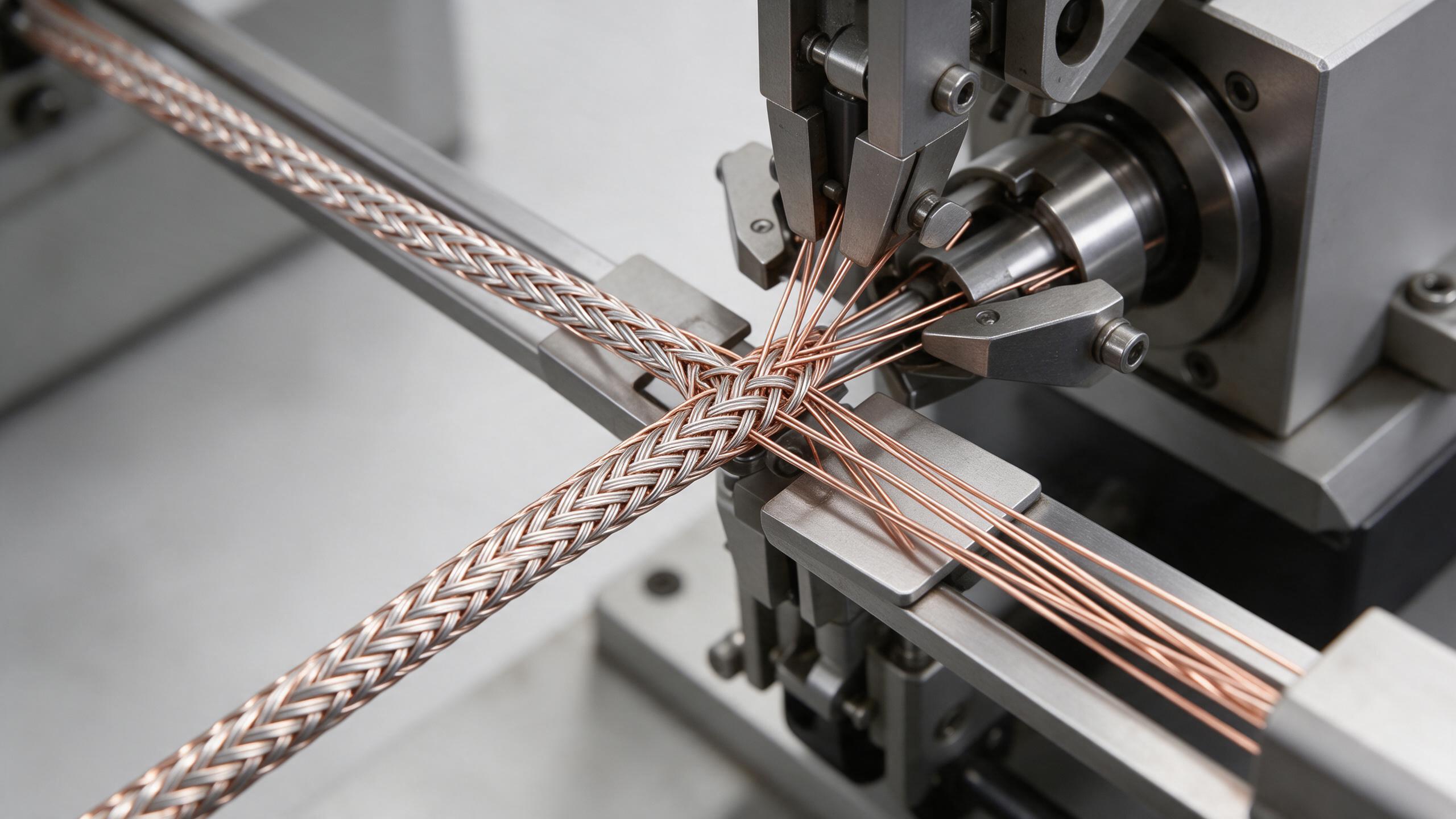
A braiding machine repeatedly guides and tensions fine wires around a core. If the wire does not behave consistently under the selected line conditions, the result may include unstable braider tension, uneven coverage, broken ends, or a braid angle that drifts from the intended design. For this reason, high tensile performance should be discussed alongside elongation and process stability rather than as an isolated sales claim.
For outdoor cable braiding, the braider also needs a construction that can be converted without unnecessary interruptions. High tensile stranded copper clad aluminum wire can be a practical candidate when its tensile range, elongation behavior, and surface condition are compatible with the customer’s equipment and braid pattern. The correct setting is project-specific: a wire suited to one braiding setup, core diameter, or coverage target may need adjustment for another.
Ask for data that connects material to the process
- Nominal diameter and permitted tolerance for each strand.
- Strand count and finished construction, including any lay-direction requirement.
- Tensile-strength and elongation test values for the supplied lot or agreed production range.
- Copper-cladding identification and any applicable material specification.
- Surface, spool, and packaging conditions that affect unwinding.
- Recommended sample quantity and a plan for braiding-machine trials.
One recognized reference point is ASTM B566, which covers bare round copper-clad aluminum wire for electrical applications. It is useful as a specification and documentation discussion point, but buyers should confirm the edition, scope, and project requirements with the supplier and their own technical team. It should not be used to infer that every braid design has the same acceptance criteria.
How stranding supports a workable braid
Stranding changes how a conductor handles compared with a solid wire. For a braid, that can influence flexibility and the way the material conforms around the cable core. Yet “stranded” does not automatically mean easier processing in every case. Strand geometry, individual-wire condition, and the interaction with tension devices all influence the result.
When assessing high tensile stranded copper clad aluminum wire, discuss the intended braid coverage and braid angle before deciding that a particular construction is appropriate. A fine, closely controlled construction may make sense for one shield design, while another cable may prioritize a different balance of coverage, handling, and finished diameter. Reviewing a trial braid is more informative than relying only on a catalogue description.
Outdoor exposure is a cable-system question
It is tempting to label any conductive braid as “outdoor ready” after looking at the base conductor. That is not a dependable approach. In outdoor cable braiding, moisture, temperature cycling, ultraviolet exposure, contaminants, jacket design, terminations, installation method, and the presence of dissimilar materials can all influence long-term behavior. The braid is only one element in that system.
A better practice is to define the environmental profile and then agree on the validation route. Depending on the application, that may include finished-cable environmental testing, corrosion-related assessment, electrical-continuity checks after conditioning, or inspection of braid coverage and physical condition. Accelerated wet-dry exposure is one example of an evaluation approach used for conductor systems; the method and acceptance criteria still need to fit the actual cable design.
A practical comparison framework
| Question | Why it matters | What to confirm |
|---|---|---|
| What does the braid need to do? | Shielding, bonding, and mechanical roles can lead to different priorities. | Target electrical function, coverage, and any continuity requirement. |
| How will it be braided? | Braider tension and braid geometry affect conversion stability. | Machine type, line conditions, core size, braid angle, and trial plan. |
| What defines tensile suitability? | High tensile performance must fit the process without ignoring elongation. | Agreed tensile and elongation ranges plus lot-level evidence. |
| What makes the application outdoor? | External conditions affect the entire cable assembly. | Exposure profile, cable-jacket design, terminations, and validation method. |
| How will quality be checked? | Clear acceptance criteria reduce late clarification. | Material documents, sample-braid review, and finished-cable tests. |
When is this material a sensible option?
High tensile stranded copper clad aluminum wire is worth considering when the cable project needs a stranded braid material and the team is prepared to validate its electrical, mechanical, and processing fit. It may be especially relevant where the selection conversation needs to balance conductor construction with braiding stability and the requirements of an outdoor cable system. The benefit is not a universal answer; it is the opportunity to build a more deliberate specification around the real application.
LT CABLE’s published site profile places CCA, CCAM, CCS, aluminum-alloy stranded wire, and coaxial-cable raw materials in a cable-industry portfolio. For a technical inquiry, the most productive next step is to share the intended cable use, braid construction, target dimensions, processing conditions, and required verification documents. That gives both purchasing and engineering teams a common basis for evaluating high tensile stranded copper clad aluminum wire before production decisions are made.
RFQ checklist for outdoor cable braiding
- State the cable application and the braid’s electrical or mechanical role.
- Specify strand construction, nominal diameter, tolerance, and desired braid coverage.
- Provide the braiding equipment conditions and any prior process observations.
- Define tensile, elongation, and continuity evidence needed for approval.
- Describe the expected outdoor exposure and finished-cable validation plan.
- Request representative samples before scaling to routine production.
That checklist keeps outdoor cable braiding anchored to verifiable requirements. It also makes it easier to determine whether high tensile stranded copper clad aluminum wire is aligned with the actual cable design rather than merely familiar in name.


