 EN


What influence does raw-material aluminum purity bring on final conductivity performance of finished ccam wire
When buyers ask for high conductivity ccam wire, aluminum purity is a sensible starting question, but it is not the final answer. CCAM wire combines a copper layer with an aluminum-magnesium-based core, so the finished electrical result comes from the whole construction and the way it is made. As a conductor-material advisor, I would first separate two questions: what does the incoming aluminum contribute, and what does the finished wire test demonstrate?
That distinction matters in telecom, coaxial, and other cable-material discussions. A purity certificate can indicate control of the aluminum feedstock. It cannot, by itself, establish the conductivity of a finished high conductivity ccam wire at a specific diameter, copper ratio, temperature, and test condition. A useful review follows the process chain from incoming metal through composite construction to the agreed measurement.
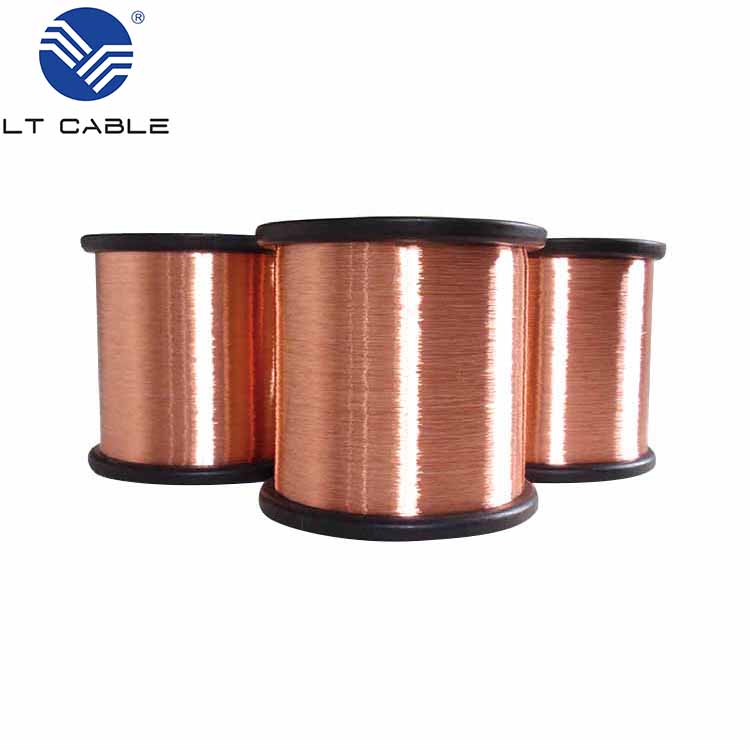
Why aluminum purity affects the electrical starting point
Electrical current moves through a metal lattice. Elements held in solid solution, inclusions, and other deviations from the intended composition can scatter electrons and increase resistivity. The impurity profile and grade of aluminum used for high conductivity ccam wire can therefore influence the electrical contribution of the core. Higher purity is often associated with lower resistivity in aluminum, but that relationship is not a universal finished-wire promise.
For CCAM wire, the word “purity” also needs a precise meaning. It may refer to total aluminum content, limits on particular trace elements, a supplier grade, or a chemistry report for an aluminum-magnesium alloy. Those are not interchangeable. Magnesium is intentionally present in many CCAM core systems for mechanical reasons, so evaluating a high conductivity ccam wire requires the agreed alloy specification rather than a generic claim about pure aluminum.
In practical incoming inspection, it is more useful to compare the material certificate with the specified composition range and identification records than to rely on a broad label. The first check is simple: confirm that the heat or lot can be linked to the agreed material definition. This creates an evidence trail before drawing, cladding, or stranding changes the finished behavior.
Purity is one input in the finished CCAM conductivity chain
A high conductivity ccam wire is a composite conductor. Its measured direct-current conductivity reflects more than the aluminum-based core. Copper proportion, copper-layer continuity, core diameter, total cross-sectional area, metallurgical bonding, drawing reduction, surface condition, and the test method can all change the reported result. A low-resistivity core supports the target, yet it does not override those other variables.
The copper ratio is particularly important because copper and aluminum-based materials do not contribute equally to the composite cross-section. Two CCAM wires can use aluminum feedstock with similar chemistry and still show different values if their copper fractions or final dimensions differ. That is why a procurement team comparing high conductivity ccam wire should avoid asking only for aluminum purity.
At the transition between cladding and drawing, it is worth recording observable signals rather than assuming a single cause for every variation. The relevant review can include dimensional consistency, layer distribution, surface condition, and the continuity of the copper-clad structure. These checks do not replace electrical testing; they help explain whether the finished construction matches the specification used to interpret the result.
How manufacturing can preserve or reduce the benefit
Raw-material consistency gives a high conductivity ccam wire program a more controlled starting point. Manufacturing then determines whether that starting point is carried through the product. Excessive variation in geometry changes resistance per unit length. A discontinuous or uneven copper layer can change the contribution of the copper portion. Processing conditions can also affect the practical consistency of the wire supplied from one lot to the next.
A single number on a material certificate can be misleading when read on its own. A stronger method is to place that figure beside the finished-wire drawing, copper proportion, nominal diameter, length basis, and electrical test requirement. Rather than asking only whether a high conductivity ccam wire uses high-purity aluminum, ask whether the supplier can relate the incoming material controls to the agreed finished-wire test.
Conductivity tests must state their conditions
Conductivity can be reported in different forms, including resistance, resistivity, or a percentage relative to a reference standard. These values are meaningful only when the unit, sample length, temperature reference, diameter basis, and method are clear. Temperature deserves attention because metallic resistance changes with temperature. A result for high conductivity ccam wire should therefore be compared only with results obtained under compatible conditions.
For a production or sourcing decision, define the acceptance value before samples are evaluated. Specify whether the requirement is a maximum DC resistance, a minimum conductivity value, or another agreed electrical criterion. Then identify the sample quantity, test instrument, conditioning, and tolerance. This gives the phrase “high conductivity” a checkable meaning for ccam wire.
A practical verification checklist for high conductivity ccam wire
- State the final cable application and whether DC resistance, high-frequency behavior, mechanical strength, or several properties carry the most weight.
- Define the CCAM core chemistry and the limits or certificate fields required for incoming aluminum-based material.
- Confirm nominal diameter, permitted tolerance, copper proportion or layer requirement, and the unit of supply.
- Agree on the electrical acceptance method, temperature reference, sample length, and result format for high conductivity ccam wire.
- Request lot traceability between material records, production records, and the finished-wire test record.
- Use sample validation when the cable process or end use has a narrow operating window.
This checklist also helps engineering and purchasing teams use the same language. A common rework point can be an electrical requirement that was not documented with its test conditions. For high conductivity ccam wire, an agreed specification avoids treating a general purity statement as a substitute for finished-product evidence.
What to request before approving ccam wire
Ask for the proposed construction, material definition, dimensional data, and the electrical test record in one review. If the end use is sensitive to resistance or signal behavior, discuss the cable construction and validation plan rather than relying on a catalog description. The CCAM wire product category can provide a starting point for a product discussion, while the final selection should remain tied to the application and agreed verification steps.
In short, raw-material aluminum purity can influence the core’s contribution to a high conductivity ccam wire. It is valuable upstream control data, not a stand-alone certificate of final performance. Copper ratio, composite integrity, dimensions, processing consistency, and a defined electrical test complete the picture. When those conditions are documented together, the discussion becomes more useful for both cable manufacturing and technical sourcing.


