 EN


What are the differences between bare aluminum magnesium alloy wire and tinned version
Bare aluminum magnesium alloy wire exposes the alloy surface, while a tinned version has an added tin-based surface layer. That distinction changes what a connector, a braiding machine or the surrounding environment contacts first. It does not, by itself, establish a cable's current rating, strength or service life.
For a useful comparison, hold the alloy grade, temper, diameter and intended process constant. Then compare the surface, the complete joint and the evidence available for each option. The following framework is for cable manufacturers and purchasing teams evaluating wire for a particular construction, not a substitute for qualification testing.
What changes when the wire is tinned?
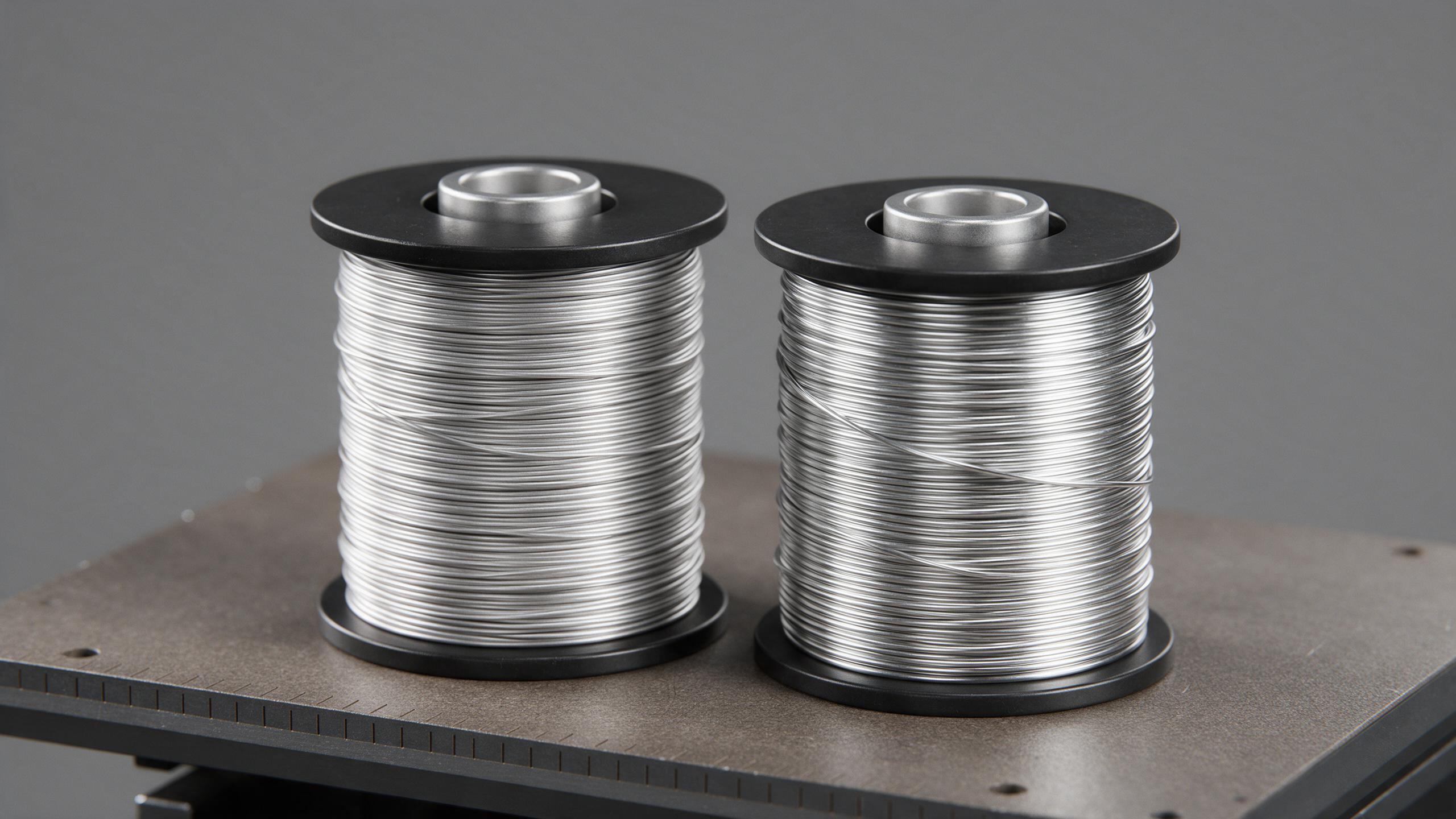
Bare aluminum magnesium alloy wire has no intentionally applied metallic coating on its surface. Aluminum forms a natural oxide film in air. That film can help limit further attack in some environments, but it can also affect electrical contact and make ordinary soldering difficult. Its condition can change with handling, storage and exposure.
Tinned aluminum magnesium alloy wire adds a tin-based surface coating over the alloy. Ask the supplier to identify the coating composition and any intermediate layers: a silver-colored surface alone does not establish what is underneath. The tin surface may offer a more workable contact or soldering contact surface, but only if the actual coating, joining process and finished joint are qualified together.
| Decision factor | Bare alloy surface | Tin-coated surface |
|---|---|---|
| Surface in contact | Alloy with its natural oxide film | Tin-based layer, subject to continuity and wear |
| Connection | Oxide and compatible termination deserve particular attention | Coating can change the contact surface; joint design still matters |
| Exposure | Response depends on alloy and environment | Performance depends on coverage, damage and environment |
| Processing | No metallic coating to inspect for damage | Check coating adhesion and condition after production |
| Commercial comparison | Compare the agreed bare specification | Include coating and qualification requirements in the quote |
Electrical contact is more than bulk conductivity
The alloy grade and cross-sectional area affect the wire's electrical resistance. Surface condition is especially relevant at a termination, where the contact must carry current through a small contact surface. Bare aluminum magnesium alloy wire may need an aluminum-compatible terminal and a documented preparation procedure; follow the connector manufacturer's instructions for cleaning, compounds and tightening where applicable.
A tin-coated surface can change that contact contact surface, but it does not automatically make an aluminum-alloy wire equivalent to copper or suitable for any copper-only connector. Verify the connector's approved conductor material and size range. For a meaningful comparison, measure resistance on representative finished joints, including any specified conditioning, rather than comparing the metal names alone.
At higher frequencies, cable geometry and surface properties can also influence performance. A coating's effect depends on its thickness, material and operating frequency; ask for measurements on the actual cable design instead of assuming that a tin layer improves shielding or transmission.
Corrosion: coating coverage and exposure both matter
Bare aluminum magnesium alloy wire can be a practical candidate in a controlled, dry assembly, provided the exposed surface and contacts meet the project's requirements. In damp or chemically demanding service, evaluate the alloy, contaminants, moisture path and neighboring metals together. Neither an oxide film nor a coating is a universal corrosion guarantee.
For tinned aluminum magnesium alloy wire, continuous, adherent coating may reduce direct exposure of the alloy surface. Scratches, pores, cut ends and damaged areas can expose underlying metal. When moisture creates an electrolyte, dissimilar metals in contact can form a galvanic couple; the result depends on the materials, exposed areas and environment. Tin on a wire or connector does not remove the need to control moisture and assess the full joint.
Agree on an exposure test that represents storage, installation and service. Check both samples before and after the test, including the terminated ends. A visual coating inspection alone cannot establish long-term joint resistance or field life.
Joining, processing and temperature
A tinned surface can be useful when a specified joining process calls for it, but solderability must be demonstrated for the supplied wire, solder, flux and process. A coating does not turn every termination into a soldered joint. Some applications instead require a qualified mechanical termination; using the wrong method can damage the conductor or produce an unreliable connection.
When braiding or stranding fine wire, check how guides, tension and subsequent handling affect the surface. Bare aluminum magnesium alloy wire has no tin layer to flake or wear off, while coated wire should be checked for adhesion and continuity after the actual manufacturing operation. For either material, inspect breakage, dimensions and the finished assembly against agreed acceptance criteria.
Pure tin has a reference freezing point of approximately 231.9 °C, according to the US National Institute of Standards and Technology. This is a material reference, not an allowable wire operating temperature: coating composition, time at temperature, insulation and joint design can impose different limits. Confirm the supplier's temperature guidance and test the finished assembly under the expected thermal cycle.
How should buyers compare the two options?
Start with the function. If a protected assembly uses an approved aluminum-compatible contact and no coating is required by the design, bare aluminum magnesium alloy wire may be worth evaluating. If a specified contact surface or process needs a tin surface, assess the tinned option against its coating requirements and the same end-use conditions. In either case, a sample that works in a bench check still needs validation in the intended production and service environment.
Compare quotations on the same basis: wire diameter and tolerance, alloy and temper, finished length or mass, packing, inspection requirements and any coating specification. For the coated option, include coating composition, thickness or mass where specified, continuity and adhesion criteria. A lower unit price is not a complete comparison if the alternatives require different handling, inspection or joint qualification.
Information to include in an RFQ
- Intended cable construction and the role of the wire, such as a braid element or other component.
- Alloy designation, temper, nominal diameter and tolerance; identify whether diameter is measured over the coating.
- Required surface: bare or tin-coated, including any agreed coating composition and acceptance criteria.
- Termination material and method, production steps, operating temperature and exposure to moisture or chemicals.
- Samples, test methods, inspection records, packaging and the acceptance procedure agreed by both parties.
For a material discussion, visit Litong Cable Technology and share the cable construction and open specification questions. Its stated product scope includes CCA, CCAM and CCS wire; availability of a particular bare or tinned construction should be confirmed for the request.


