 EN


The Critical Role of Elongation Testing in Cable Manufacturing
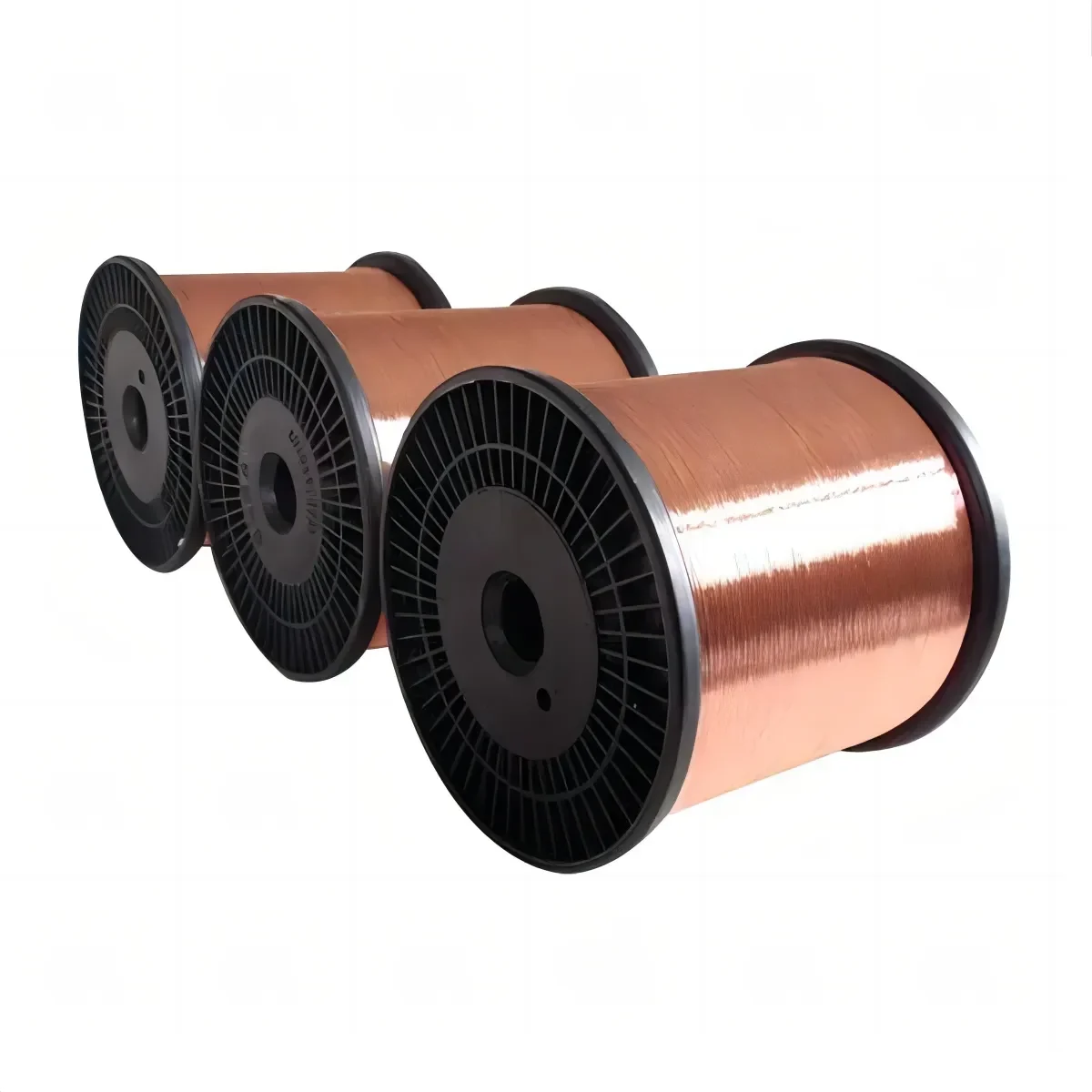
Ensuring mechanical reliability in modern electrical systems begins at the material inspection stage. When evaluating bimetallic conductors, checking the elongation rate of annealed copper clad aluminum wire samples stands as a fundamental quality control metric. Unlike pure copper or hard-drawn aluminum, annealed copper clad aluminum wire combines a lightweight aluminum core with a metallurgically bonded outer copper layer. This unique structure requires precise mechanical evaluation to verify that the annealing process has successfully restored ductility and flexibility. Without proper ductility testing, conductors can fracture during cabling, stranding, or installation under mechanical stress. At Litong Cable, strict verification protocols ensure that every batch of annealed copper clad aluminum wire meets rigorous structural and performance benchmarks before deployment in automotive, telecommunication, or industrial power transmission networks.
Understanding International Standards and Technical Specifications
Professional testing of annealed copper clad aluminum wire samples relies heavily on internationally recognized standards such as ASTM B566. This specification establishes strict thresholds for chemical composition, electrical resistivity, tensile strength, and elongation performance across various classes of copper clad aluminum wire. Specifically, Class 10A and Class 15A designate annealed wires featuring nominal 10% and 15% copper volume fractions respectively. The elongation rate of annealed copper clad aluminum wire samples directly reflects the molecular restructuring achieved during thermal annealing. If the temperature or duration of the annealing furnace is mismanaged, the wire may become excessively brittle or overly soft, leading to elongation values that fall outside permissible tolerances. Compliance with ASTM B566 ensures that the elongation rate of annealed copper clad aluminum wire samples aligns with global engineering expectations, preventing premature mechanical fatigue and termination failures in field applications.
Precise Sample Preparation and Environmental Conditioning
Accurate test results depend heavily on meticulous sample preparation. When technicians handle annealed copper clad aluminum wire samples for elongation testing, any surface contamination, mechanical nicking, or severe bending can compromise the data. To ensure absolute precision, laboratory personnel must follow structured preparation guidelines:
Select representative specimen lengths directly from production reels without tension or flattening.
Clean surface oils, drawing residues, and oxidation layers using approved non-corrosive solvents.
Inspect the exterior copper cladding under low magnification to ensure coating integrity before mounting.
Condition all specimens at standard room temperature to eliminate thermal expansion biases.
Furthermore, environmental conditioning plays an unnoticed yet vital role. Testing should be conducted at stable room temperature, as thermal fluctuations can influence metal ductility. Technicians must inspect the exterior surface of the annealed copper clad aluminum wire samples under low magnification to verify that the copper cladding remains fully intact without micro-splits, blisters, or exposed aluminum cores before mounting the specimen into the tensile testing apparatus.
Essential Testing Equipment and Calibration Parameters
Executing a reliable evaluation requires specialized mechanical testing equipment designed for fine bimetallic conductors. Modern wire elongation testers utilize constant-speed motors paired with high-efficiency circulating screws to apply a steady tensile force, usually maintained at a drawing speed of 250 to 300 mm per minute. When analyzing the elongation rate of annealed copper clad aluminum wire samples, slip-resistant pneumatic or mechanical grips are mandatory. These specialized fixtures prevent premature pinching failures or slippage at the clamping points, which is a common source of measurement error. Advanced testing benches incorporate optical encoders or electronic sensors that automatically calculate elongation percentages upon sample rupture, eliminating human reading errors. Calibration of load cells and extension indicators must be verified regularly against certified national standards to maintain high measurement accuracy within plus or minus one percent.
Step-by-Step Elongation Measurement Process
Executing the physical test requires a disciplined workflow to ensure repeatability and precision. First, power on the elongation testing machine and verify that all electronic sensors and digital displays are zeroed out. Secure the prepared specimen into the upper and lower anti-skid fixtures, ensuring that the distance between the grips exactly matches the required initial gauge length. Align the annealed copper clad aluminum wire samples carefully to prevent any angular stress or off-axis pulling. Engage the test cycle so the constant-speed motor drives the lower clamp downward at the specified rate. Monitor the real-time elongation data on the digital readout panel as the bimetallic wire stretches under tension. Once the specimen fractures, the machine automatically halts the movement and records the final elongation value. The percentage increase in length relative to the original gauge length represents the final elongation rate, which must be immediately compared against internal manufacturing specifications and industry standards.
Parameter Comparison Table for Annealed CCA Wire Classes
To help engineers and quality control inspectors evaluate test results effectively, standardized parameters for annealed copper clad aluminum wire are structured across different volume classes and diameters. The following table outlines typical mechanical requirements based on established industry benchmarks:
| Wire Class & Type | Nominal Copper Volume | Typical Diameter Range | Minimum Elongation Rate (%) | Tensile Strength Limit (MPa) | Primary Application Focus |
|---|---|---|---|---|---|
| Class 10A (Annealed) | 10% | 0.12 mm - 4.0 mm | 15% - 30% | 138 - 207 MPa | Flexible Winding & Automotive |
| Class 15A (Annealed) | 15% | 0.10 mm - 3.5 mm | 15% - 25% | 145 - 215 MPa | High-Conductivity Harnesses |
| Class 10H (Hard-Drawn) | 10% | 0.15 mm - 4.5 mm | 1.0% - 3.0% | Higher Threshold | Coaxial & RF Center Conductors |
| Custom Industrial CCA | 12% | 0.20 mm - 3.0 mm | 12% - 22% | Custom Verified | Specialized Power Transmission |
Common Pitfalls and Troubleshooting in Testing
Despite standardized procedures, testing anomalies can occur due to operator error or equipment limitations. One frequent issue is specimen slippage inside the clamping jaws, which artificially inflates the recorded elongation value because movement is measured from the grips rather than within the gauge length. Another challenge involves necking occurring directly adjacent to the fixture interface, which invalidates the test according to ASTM guidelines since the fracture must happen within the central gauge boundaries. Technicians must inspect broken annealed copper clad aluminum wire samples to confirm that the break location is central. Additionally, variations in copper cladding thickness along the wire length can cause localized stress concentrations, leading to inconsistent elongation results across different samples from the same production reel. Establishing rigorous cross-sectional checks alongside tensile testing resolves these discrepancies and safeguards product quality.
Litong Cable Quality Assurance Commitment
Maintaining uncompromising quality standards is essential for long-term reliability in electrical installations. At Litong Cable, comprehensive testing protocols—ranging from density screening and micro-section analysis to precise elongation evaluations—are embedded into every stage of production. By adhering strictly to international manufacturing standards and utilizing state-of-the-art testing equipment, we ensure that every meter of our bimetallic conductor performs reliably under demanding operational stresses. For professional guidance on wire selection, custom engineering specifications, or detailed technical documentation, visit our primary resource hub at


